
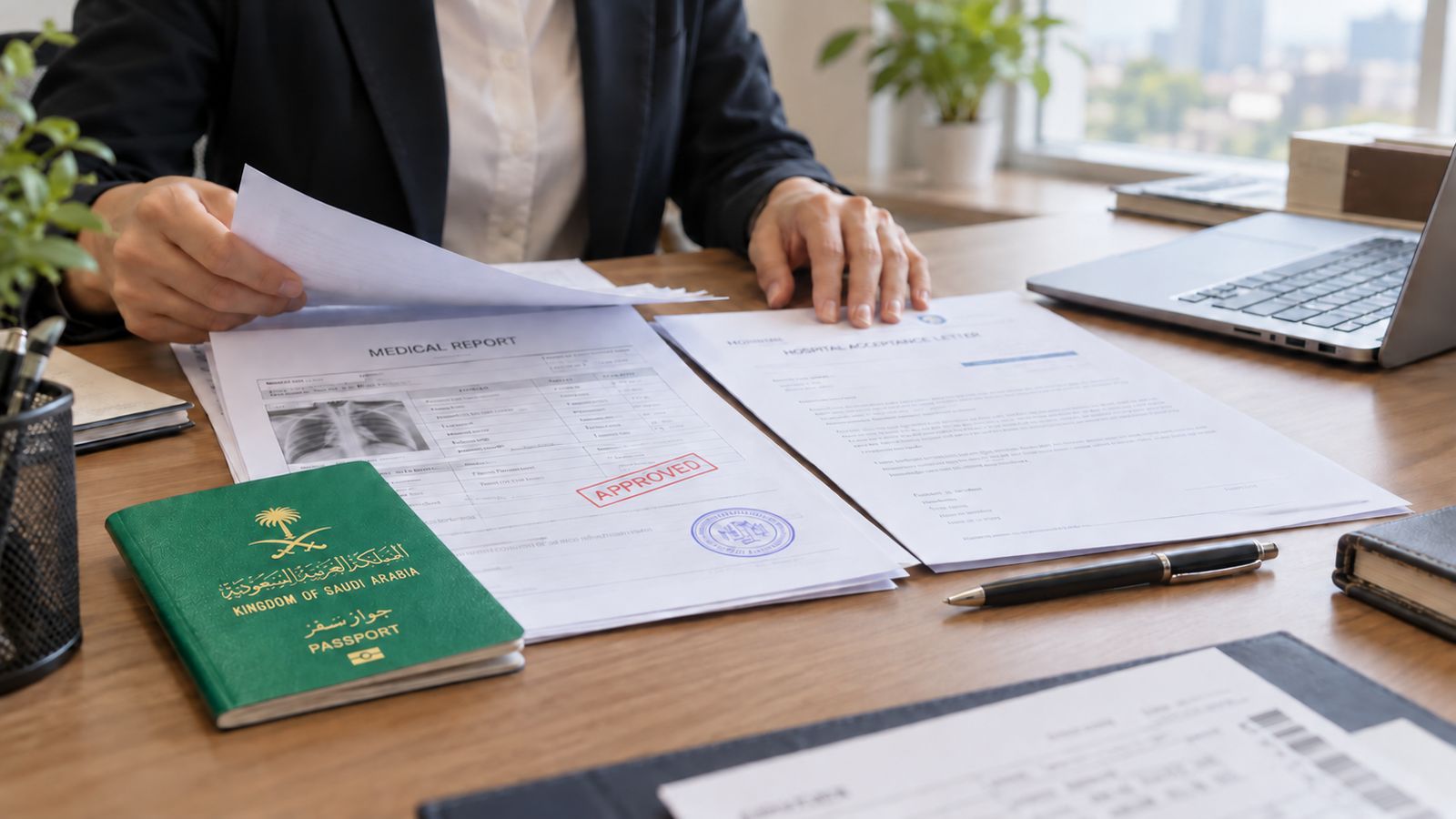
When a patient needs treatment abroad, the first essential step in their journey is getting a medical visa. This visa lets them enter another country to receive care at a hospital or specialized medical center. The procedures differ from country to country, but there are some basic steps to follow to get it quickly and smoothly.
In this article we explain how to get a medical visa, what you need, and the most important tips to avoid delays in your application.
What is a medical visa? 🛂
A medical visa is a special type of visa for people who need treatment abroad. It is issued on the basis of a medical report showing that treatment in the destination country is necessary, and it usually allows a stay of a set period in line with the treatment plan. In some countries, the patient's companion can also get a visa to accompany them during treatment.
When do you need a medical visa? 🤕
A medical visa is issued in the following cases:
- When the patient needs treatment that isn't available in their country, such as advanced surgery or rare treatments.
- When a specialist medical consultation is needed from international doctors or accredited hospitals.
- In medical evacuation cases that require moving the patient quickly to a hospital abroad.
- For advanced medical tests that aren't available at local hospitals.
Steps to get a medical visa 📝
To get your visa on time, follow these steps carefully:
1. Get an approved medical report 🏥
Before applying, get a detailed medical report from your treating doctor at home, stating:
- The nature of the medical condition.
- The need for treatment abroad.
- The recommended hospital or specialist.
The report must be stamped and approved by the competent medical authority, such as the Ministry of Health or a government hospital.
2. Book an appointment at the destination hospital 📅
With the medical report in hand, contact the hospital in the country where you want treatment to get an official appointment for treatment or a consultation. Hospitals usually issue a medical acceptance letter confirming they are ready to receive the patient and provide the right treatment.
3. Prepare the required documents 📑
Each embassy or consulate has its own requirements for a medical visa, but the basic documents generally include:
- A valid passport (valid for at least 6 months).
- Recent personal photos that meet the visa requirements.
- The approved medical report from the doctor or hospital.
- An acceptance letter from the hospital in the destination country.
- Proof of financial means, such as a bank statement or a letter from a sponsor covering treatment costs.
- Proof of travel booking in some cases.
- Medical travel insurance covering emergency treatment costs during the stay.
4. Fill in the visa application form 🖊️
Once your documents are ready, fill in the destination country's medical visa application form. You can usually find it on the embassy's official website or get it directly from the consulate. Make sure all information is accurate to avoid mistakes that could delay your application.
5. Pay the visa fee 💳
Medical visa fees vary by country and may depend on the planned length of stay. Fees can be paid online or at the embassy when you apply. Some countries waive fees for patients with serious medical conditions.
6. Book an appointment at the embassy or consulate 🏛️
After completing the application, book an appointment at the embassy or consulate to submit your documents and attend an interview if required. In some cases, the patient or companion may be asked to attend a personal interview to explain the reasons for travel and treatment.
7. Wait for approval and collect the visa ⏳
Issuing a medical visa usually takes from a few days to a few weeks, depending on the embassy and the destination country. Once approved, the visa can be collected from the embassy or delivered by courier.
How long is a medical visa valid? 📆
Validity depends on the length of treatment, but usually:
- Some medical visas are valid for 30 to 90 days.
- In some cases the visa can be extended based on a new medical report from the hospital in the destination country.
- Some countries offer long-term visas for patients who need ongoing treatment over long periods.
Tips to make getting a medical visa easier ✅
- Apply early: submit your application well before your treatment date to avoid delays.
- Check your documents: any missing or incorrect paperwork can lead to refusal.
- Use translation services: some embassies require documents translated into the destination country's language, so use a certified medical report translation service.
- Work with a specialist company: such as Alamelway Medical, where we help with medical visas and coordinate treatment abroad quickly and easily.
How can Alamelway Medical help? 🌍
We specialize in medical visa services and coordinating treatment at the best European hospitals, especially in Germany and across Europe. Our services include:
- Coordinating treatment bookings with international hospitals.
- Preparing and translating medical reports to embassy requirements.
- Helping patients submit medical visa applications.
- Arranging medical evacuation, travel, and accommodation.
If you are planning treatment abroad, getting a medical visa is an essential step that must be done carefully for your treatment journey to go smoothly. By following the right steps and preparing the required documents, you can avoid delays and get the right care at the right time.
If you need professional help getting a medical visa or arranging treatment abroad, don't hesitate to contact the Alamelway Medical team for a comfortable, hassle-free experience. 🏥✈️💙